The Loneliness of the 3 am Feed and Why Anticipatory Guidance is a Practitioner’s Best Tool

If you type the word “breastfeeding” into Google Trends, a stark and unyielding pattern emerges. Every single day, without fail, global search volume peaks in the hours between 3 am and 5 am.
The Protective Link: Breastfeeding and Maternal Mental Health

The relationship between infant feeding and maternal mental health is often framed through the lens of stress and struggle, and whilst for many new mothers, the postnatal period is a time of immense transition, biological and psychological evidence shows that, when supported well, breastfeeding can improve mental health outcomes for new mothers.
Building Self-Efficacy in Breastfeeding: What It Is, Why It Matters, and How to Strengthen It in Practice

Some parents meet the same challenges and keep going. Others, faced with identical hurdles, feel stuck and stop. The difference is often not anatomy or milk supply. It is self-efficacy — a parent’s belief that they can take effective action in the face of difficulty. This belief predicts what people attempt, how long they persist, and how they recover from setbacks.
How Long Can a Newborn Go Without Feeding After Birth?

What do UNICEF, WHO and NHS guidance really say about when newborns must be fed after birth? A clear, evidence-based look at best practice.
Hand Expression Vs Pump Use for Expressing in the Early Postnatal Period: What the Latest UK BFI Guidance Really Says.
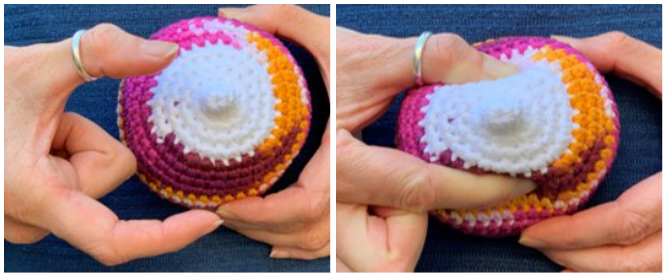
What do the latest UK Baby Friendly Initiative and NHS guidelines say about hand expression, early pump use, and antenatal colostrum harvesting? Dee Bell, RM, IBCLC, explains the evidence, current practice and her professional view.
Why Breastfeeding Beyond Six Months Still Matters, and How Misinformation Harms Families

Breastfeeding past six months provides vital benefits for babies and parents. Learn how misinformation can damage confidence, especially when families face feeding challenges like CMPA.
Understanding Cow’s Milk Protein Allergy (CMPA)

Cow’s Milk Protein Allergy (CMPA) is the most common food allergy in infants, yet it remains widely misunderstood. Its symptoms often mimic other typical infant issues, such as colic, reflux, or eczema, leading to both overdiagnosis and missed cases. While not usually seen in the very early weeks, CMPA can develop at any point in the first year. Our Masterclass, Understanding Cow’s Milk Allergy in Infants: Symptoms, Diagnosis & Supporting Families, explores this essential topic in depth.
What Is a Tongue-tie? A Practical Overview for Perinatal Professionals

Whether you’re an Infant Feeding Coach™, Midwife, Health Visitor, Doula, or Body Worker, you’ve likely supported families where feeding just isn’t going to plan — and often, tongue-tie is raised as a possible cause. But with so much conflicting information out there, how do we confidently support and signpost families?
Here’s a clear, practical refresher to help you better understand tongue-tie — what it is, what it isn’t, and how to recognise when a referral is appropriate.
Understanding Vasospasm and Raynaud’s in Breastfeeding: What You Need to Know

For many breastfeeding mothers, the journey can be filled with unexpected challenges, one of which is vasospasm, also known as Raynaud’s phenomenon of the nipple. This condition, though not widely discussed, can be incredibly painful and is often misunderstood. Recent research highlights the importance of recognising and addressing vasospasm to support breastfeeding mothers effectively.