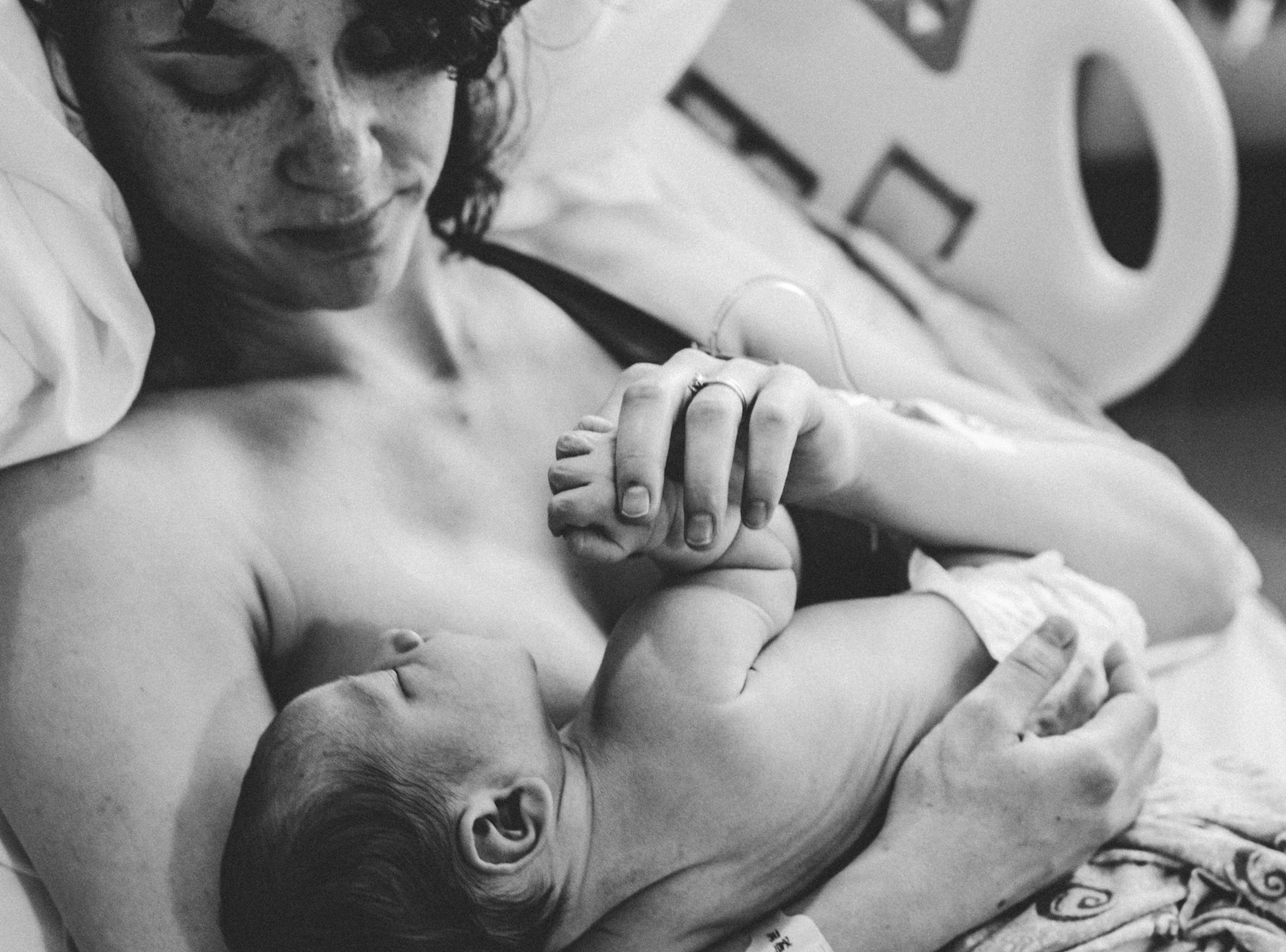
During Maternal Mental Health Week, the conversation often turns to the “stress” of infant feeding. However, recent research highlights a powerful and often overlooked connection: when it is going well and is properly supported, breastfeeding can be a significant protective factor against postnatal depression (PND).
The Biological Connection
The link between breastfeeding and mental health is deeply rooted in our biology. When a mother breastfeeds, her body releases oxytocin and prolactin – often called the “anti-stress” hormones. Working in tandem, these help to naturally lower cortisol (stress) levels and promote a sense of calm and bonding, with research finding that breastfeeding mothers had a statistically lower risk of developing PND compared to those who were not breastfeeding (Hamdan et al., 2012; Parveen et al., 2025; Xia, et al., 2022).
And recent research has introduced a fascinating new layer to this protection: the reduction of systemic inflammation. We now know that high levels of inflammation in the body are increasingly linked to the onset of depressive symptoms (Zhu J et al, 2022), and breastfeeding appears to act as a natural “buffer,” lowering the mother’s inflammatory response and, in turn, protecting her mood.
Furthermore, despite the common myth that breastfeeding leads to total exhaustion, studies have shown that breastfeeding mothers often get more total sleep. This is because the hormonal regulation helps mothers fall back to sleep more quickly after night feeds, protecting the “sleep architecture” that is so vital for mental health (Srimoragot et al., 2023).
When the "Protective Factor" Becomes a Stressor
So, if breastfeeding is biologically protective, why do so many mothers find it stressful?
The evidence is clear: it is rarely the breastfeeding itself that impacts mental health, but rather the lack of skilled support when challenges arise. A landmark study first identified that the highest risk for postnatal depression wasn’t actually linked to the method of feeding, but to a mother’s feeding intention and outcome (Borra et al., 2015). This crucial finding was recently solidified by a 2026 study, which confirmed that mothers who planned to breastfeed but met barriers they couldn’t overcome (often due to lack of support or poor professional advice) showed the highest levels of psychological distress (Ryan et al., 2026).
How Poor Support Impacts Mental Health
For a mother who is already feeling vulnerable, the quality of professional support she receives can make or break her mental well-being. Mental health is often poorly impacted by:
- Conflicting Advice: Being told ten different things by ten different professionals.
- Dismissive Language: Being told “it shouldn’t hurt” without a practitioner having the skills to find out why it does.
- The “Just Give a Bottle” Solution: Suggesting a mother stop breastfeeding to “save her mental health” when her goal is to continue, which for many, leads to feelings of grief and failure rather than relief.
When a practitioner is equipped and skilled in breastfeeding support, they are actively protecting a mother’s confidence and her mental health – not just correcting a latch!
Protecting the Dyad
Effective management of infant feeding is, in its purest form, a mental health intervention. When a mother feels supported and capable of meeting her feeding goals, her self-efficacy grows (Ahmadinezhad et al., 2024).
Supporting maternal mental health means:
- Early Intervention: Addressing latch or supply issues before they spiral into a mental health crisis.
- Consistent, Evidence-Based Care: Ensuring the mother feels heard and her goals are respected.
- Professional Skill: Recognising that “support” is a clinical skill that requires deep understanding and empathy.
Conclusion
Breastfeeding has the potential to be a profound anchor for maternal mental well-being. By understanding the biological benefits and addressing the systemic barriers to good support, we can better protect the mothers in our care.
If you are a perinatal professional who wants to move beyond “basic” advice and become a true advocate for the breastfeeding dyad, you will want to consider our Infant Feeding Coach™ Program, recognised and accredited by FEDANT.
Join our FREE Webinar – How to Become the Go-To Practitioner for Infant Feeding Support or simply book a free clarity call here.